Creative Europe Desk Bosnia and Herzegovina participated in the annual meeting of Creative Europe Desks, held in Brussels from 28 to 30 September 2026. Alongside discussions on the programme’s forthcoming priorities and support for applicants, a particular focus of BiH’s participation was cooperation with colleagues from the Western Balkans and the wider region.
For the “Western Balkans” regional session, an overview of activities and results in Bosnia and Herzegovina was prepared and shared with colleagues, drawing on official data from the Ministry of Civil Affairs of Bosnia and Herzegovina. The material covered the participation of organisations from BiH in the programme, examples of previous regional cooperation and the need to improve the quality of project proposals.
Ministry data show an increase in applications from 30 in 2022 to 124 in 2025. At the same time, according to figures published in September 2026, the success rate stood at 33.3 per cent for 2023, 30.2 per cent for 2024 and 11.3 per cent for 2025. These figures highlight the need for support focused on developing stronger proposals, starting preparations earlier and establishing partnerships.
For 2024, the reported figures show 16 supported projects involving beneficiaries from BiH, with approximately EUR 3.63 million in funding. Under the European Cooperation Projects 2026 call, 93 instances of participation by organisations from BiH were recorded in submitted proposals: 17 coordinator applications and 76 partner participations. These figures relate to the application stage, before the final selection of projects.
The contribution highlighted “Bridges of Creativity – Networking and Education for the Creative Europe Programme” as an example of regional cooperation. Held in Mostar in April 2025, with the participation of the Desks from BiH, Croatia and Serbia, the initiative combined training and the exchange of experience with networking among cultural organisations.
Another example was the consultation event held in Sarajevo on 17 August 2026, organised through cooperation between the BiH and Bulgarian Desks and Europe House. Cultural organisations, public institutions, production companies and audiovisual professionals received information on funding opportunities and preparing applications, drawing on the experience of the Bulgarian Desk.
The programme of the Brussels meeting covered developments in European policies, the annual work programme for 2027 and AgoraEU. The Culture strand addressed call results and the forthcoming call calendar, mobility through Culture Moves Europe, cascading grants and the organisation of support during the application preparation process.
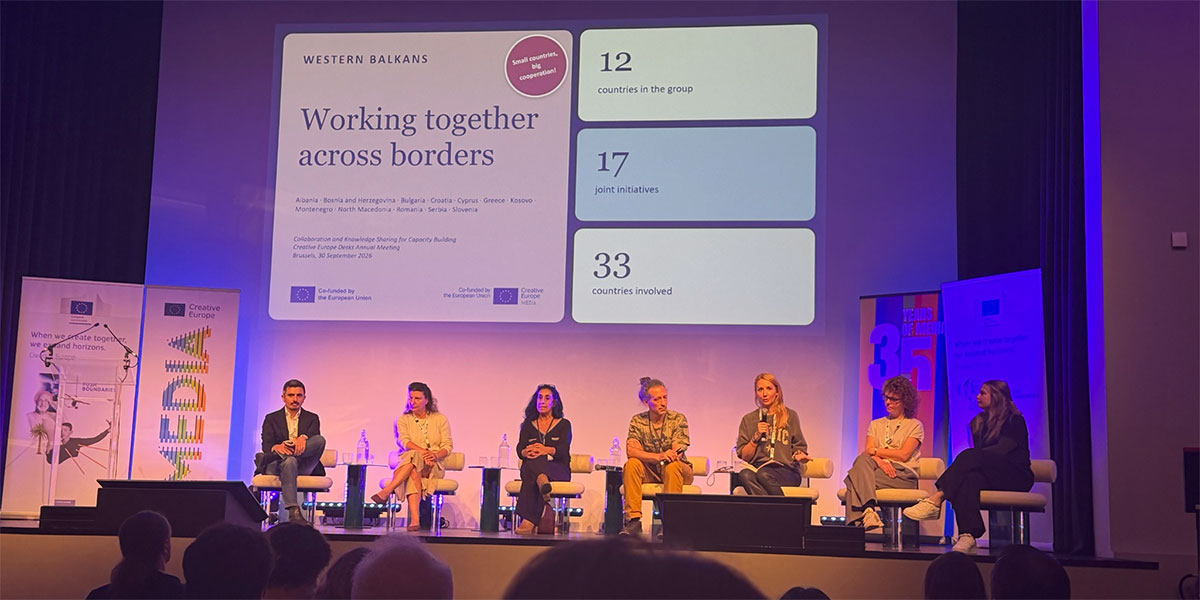
Dedicated sessions focused on environmental sustainability, monitoring and reporting on the work of the Desks, links between different EU programmes and digital tools. The regional presentation “Western Balkans – Working together across borders”, presented on 30 September, also included Bosnia and Herzegovina.
BiH’s preparatory contribution expressed interest in continuing joint training activities, partner matching and the development of cooperation between the Culture and MEDIA strands. These forms of regional cooperation can help organisations develop project ideas earlier and prepare to take on more demanding roles within European partnerships.